
Knee pain can come from osteoarthritis, a strain, tendon irritation, an old injury, or a problem that needs prompt medical evaluation. For many mild or recurring symptoms, non-medication strategies—especially gradual movement, strength-building, activity changes, and joint protection—can reduce discomfort and improve function.
What can cause knee pain?
Knee pain is a symptom rather than a diagnosis. Osteoarthritis commonly causes pain with movement, stiffness after resting, and swelling after activity. Other causes include sprains, tendon problems, bursitis, cartilage injuries, gout, inflammatory arthritis, and referred pain from the hip or lower back. ([cdc.gov](https://www.cdc.gov/arthritis/basics/index.html?utm_source=openai))
The pattern matters:
- Pain after a new workout may reflect overuse or muscle weakness.
- Pain after twisting, falling, or a sports injury may involve a ligament or cartilage.
- Morning stiffness lasting a long time, warmth, or swelling in several joints may suggest inflammation.
- Pain that travels from the back or hip may not originate in the knee itself.
Persistent knee pain should not automatically be assumed to be “just arthritis.” An accurate evaluation helps determine which activities are safe.
Can gentle exercise reduce knee pain?
Yes. Appropriate physical activity can reduce arthritis pain, improve strength and function, and support mood. The goal is not to force the knee through pain but to expose it to manageable movement consistently. Walking, cycling, swimming, water exercise, and tai chi are generally lower-impact options. ([cdc.gov](https://www.cdc.gov/arthritis/prevention/index.html?utm_source=openai))
Start below the level that triggers a flare. For example, a person who normally walks for 30 minutes might begin with five- to ten-minute sessions and gradually add time. Short sessions spread throughout the day are still useful.
A practical starting routine may include:
- Five minutes of easy walking or stationary cycling.
- Gentle knee bends while holding a sturdy surface.
- Straight-leg raises while lying down.
- Glute bridges or seated leg extensions, if comfortable.
- A brief cool-down with relaxed stretching.
Exercises should not cause sharp, stabbing, or escalating pain. The American Academy of Orthopaedic Surgeons advises stopping an exercise that causes pain rather than pushing through it. ([orthoinfo.aaos.org](https://orthoinfo.aaos.org/globalassets/pdfs/2023-rehab_knee_10-16-23.pdf?utm_source=openai))
Which strength exercises help support the knee?
Stronger muscles around the hip and thigh can reduce the amount of stress placed on the knee during walking, stairs, and standing. Strengthening should be gradual and controlled rather than based on heavy resistance or deep bending.
Useful examples include:
- Sit-to-stand: Rise from a firm chair and sit back down slowly. Use the armrests only as needed.
- Wall-supported mini-squats: Bend only a small amount while keeping the knees aligned with the feet.
- Straight-leg raises: Tighten the thigh, keep the knee straight, and lift the leg slowly.
- Side-lying leg lifts: Strengthen the hip muscles that help control knee alignment.
- Calf raises: Hold a counter and rise onto the balls of the feet.
Try a small number of repetitions every other day at first. If swelling, limping, or next-day pain increases, reduce the repetitions or choose a lower-impact activity.
How can heat, cold, and pacing help?
Cold can be useful after activity when the knee feels swollen or irritated. A wrapped cold pack may be applied for about 15 to 20 minutes, with a cloth barrier protecting the skin. Heat may feel better for stiffness before movement, such as in the morning, but it should not be used over a hot, visibly inflamed joint.
Pacing is equally important. Avoid the cycle of doing too much on a good day and then needing several days of rest. Divide physically demanding tasks into smaller portions, alternate standing with sitting, and take breaks before symptoms become severe.
For households managing stairs, yard work, or outdoor walking during icy winter conditions, joint protection also means improving footing. Use handrails, keep pathways clear, choose shoes with reliable traction, and avoid rushing across slippery surfaces. A fall can turn manageable knee pain into a significant injury.
Can weight management make a difference?
For adults with overweight or obesity, even modest weight loss may reduce arthritis-related pain and disability. Weight management is not about blaming a person for knee symptoms; it is one possible way to reduce mechanical load while improving overall health. ([cdc.gov](https://www.cdc.gov/arthritis/caring/index.html?utm_source=openai))
A sustainable approach may include:
- Adding low-impact activity in short intervals.
- Prioritizing vegetables, fruit, fiber-rich foods, and adequate protein.
- Limiting highly processed foods and sugary drinks.
- Tracking progress by walking tolerance, stair comfort, sleep, and daily function—not only by scale weight.
If weight loss is not appropriate or is medically complicated, strength and activity goals can still be valuable.
What daily habits protect the knee?
Joint protection does not mean avoiding movement. It means reducing unnecessary strain while preserving normal activity.
Helpful adjustments include:
- Keep frequently used items between waist and shoulder height.
- Use a raised surface or a garden stool instead of kneeling for long periods.
- Avoid repeated deep squats when a hip hinge or seated position will work.
- Wear supportive, comfortable footwear for walking and household tasks.
- Change position regularly instead of sitting for several hours.
- Increase exercise time, hills, speed, or resistance one variable at a time.
Repetitive bending, squatting, and other physically demanding motions can contribute to joint irritation or injury, particularly when recovery time is limited. ([cdc.gov](https://www.cdc.gov/arthritis/basics/index.html?utm_source=openai))
When is knee pain a reason to seek medical evaluation?
Some symptoms should not be managed only at home. Prompt evaluation is appropriate after a significant fall or twist, especially if the knee is badly swollen, visibly deformed, unstable, or impossible to bear weight on. Sudden severe pain, major bruising, or inability to move the joint normally can indicate an acute injury. ([niams.nih.gov](https://www.niams.nih.gov/health-topics/sports-injuries?utm_source=openai))
Also seek medical guidance for:
- A hot, red, or rapidly swollen knee.
- Fever with joint pain or swelling.
- Pain that repeatedly wakes you at night.
- A knee that locks or repeatedly gives way.
- Numbness, marked weakness, or new calf swelling.
- Pain that does not improve after several weeks of sensible activity changes.
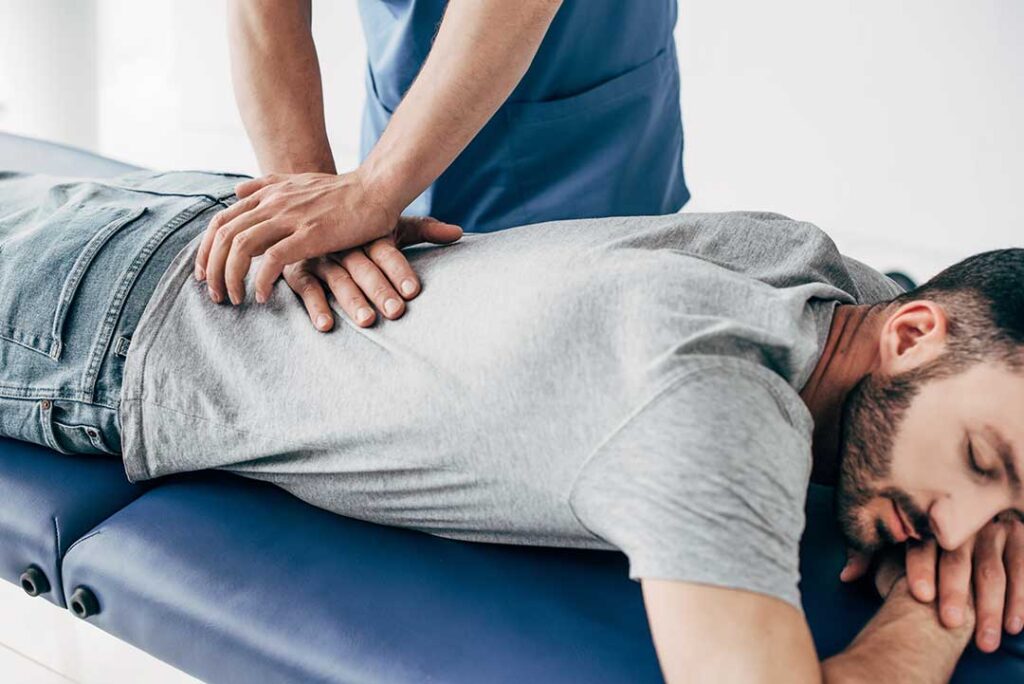
A chiropractor, physical therapist, primary care clinician, orthopedist, or rheumatology clinician may be involved depending on the suspected cause. The appropriate choice depends on the symptoms, injury history, examination findings, and any underlying medical conditions.
How should progress be measured?
Improvement is often better judged by function than by complete elimination of pain. Useful measures include walking farther, standing longer, climbing stairs more comfortably, sleeping better, or having fewer flare-ups.
Keep a simple record for two weeks: activity, pain level, swelling, stiffness, and how the knee feels the following morning. This can reveal whether a particular task—such as hills, prolonged kneeling, or sudden increases in exercise—is contributing to symptoms.
The safest plan is usually consistent, low-impact movement combined with gradual strengthening, sensible pacing, and attention to warning signs. Even five or ten minutes of comfortable activity can be a reasonable beginning, especially after a period of inactivity. ([cdc.gov](https://www.cdc.gov/arthritis/prevention/index.html?utm_source=openai))
